
The Art of "Hanging On": Durability in Long-Distance Racing
Updated: Sep 24
Whether you’re scrolling through training forums or listening to performance podcasts, durability (or physiological resilience) is a hot topic right now. While it might sound like a rebrand of "stamina" or "grit," it isn’t. Stamina is your physical capacity to maintain a high-intensity effort and grit is the mental drive to keep going, durability is the physiological resilience to fatigue that keeps your internal processes running efficiently. It’s about how your physiology holds up under the stress and resists breaking down over time. So, while durability and stamina are closely related, they are not strictly the same. If you have a lot of stamina, you have a big fuel tank, if you are durable, you remain efficient at using that fuel over long periods of time.
The "Fourth Dimension" of Performance
For decades, we have understood endurance performance to be governed by three main factors: VO2 max (engine size), lactate threshold (redline), and economy (efficiency). Durability is now being suggested as a "fourth dimension." It’s not about how your numbers stack up at the start of the race; it’s about how well you can maintain them over the course of a prolonged effort.
You don't need a load of fancy equipment or even a running watch to see this in your own training. Just think about your RPE (rating of perceived exertion). At the start of a long run on easy terrain an 8:30/mile might feel conversational, but by mile twenty on the same terrain, that same pace can feel like a big effort, it feels like you are working harder for the same output - because you are! As you fatigue you become less efficient at using energy.
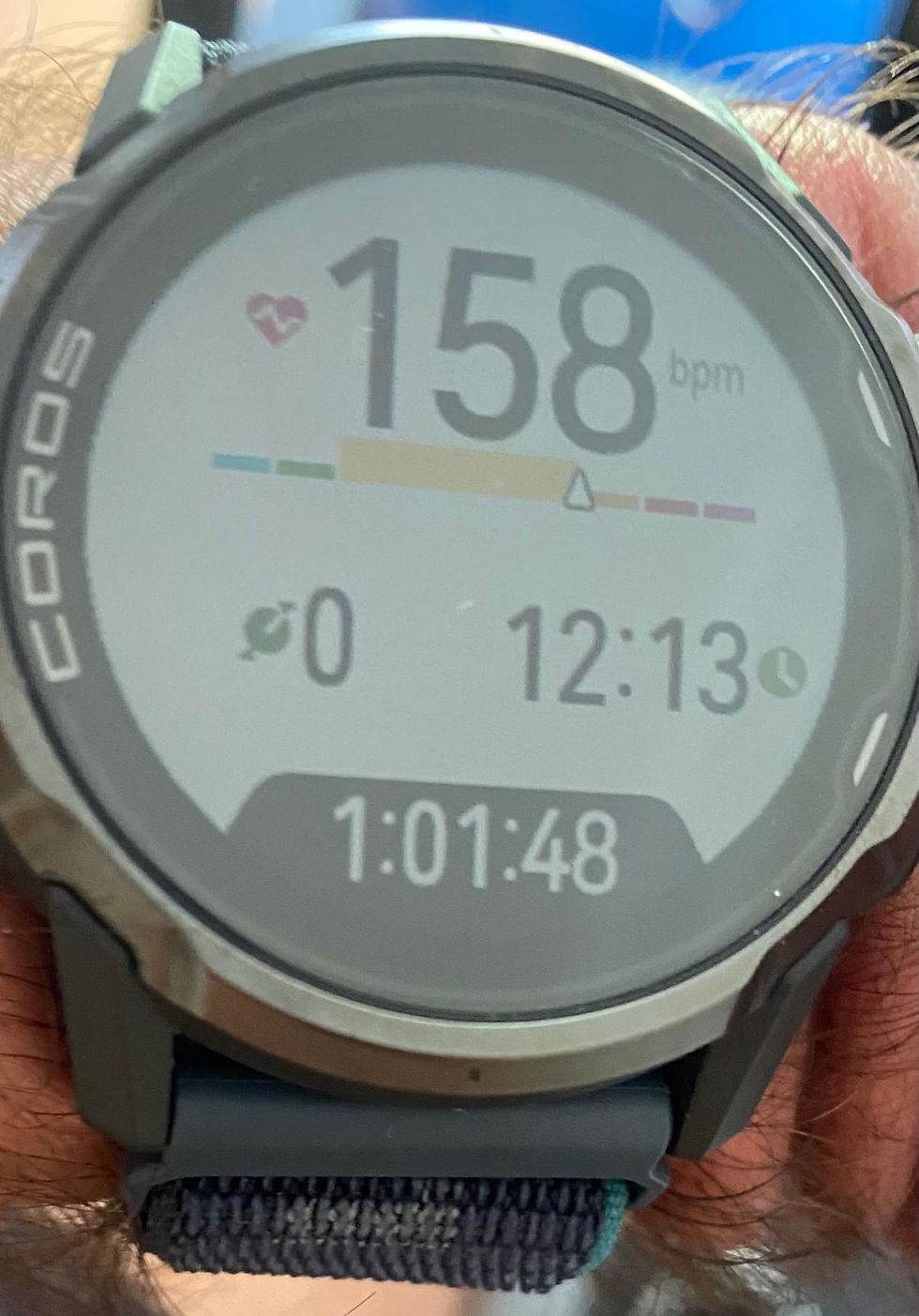
There are many factors at play but if you use a heart rate monitor, you can spot some of them through a phenomenon called cardiovascular drift. This is a "decoupling" of heart rate and intensity, where your heart rate climbs even as your power (cycling) or pace (running) remains steady or slows down. (Or your heart rate stays the same but your pace/power drop)
Take a look at the graph below. This data shows an athlete performing intervals on an indoor cycling ergometer. You can see that while the power output for each interval is almost identical (orange line & values in W), the heart rate (pink line and red values in bpm) drifts steadily upward. This athlete’s heart is working harder with every interval to get the same power output as their efficiency drops. Specifically, this example is showing us that under stress, stroke volume (amount of blood pumped in a single beat) is dropping so the heart is beating faster to maintain the same output (because cardiac output = stroke volume * heart rate).
While the athlete didn't rate each individual interval, they rated the overall session a 7/10 (Fairly Hard) and noted that the final interval was a struggle to start. Notably, this session followed a 2.5-hour easy run; that pre-existing fatigue and slight dehydration likely exaggerated the drift, making it a perfect case study for us and a decent session for the athlete in their training for a long-distance duathlon.

And here are some of the main reasons why this happens…
Blood Volume Depletion: As you sweat, you lose water (and electrolytes) from your blood, which reduces your overall blood volume, causing your stroke volume to drop. To maintain cardiac output your heart rate must increase to compensate.
Increase in core temperature: To cool down, the body shifts blood from your core to the skin, where it can pool in large volumes. This depletes central blood volume and further reduces stroke volume but also stimulates the sympathetic nervous system which further increases heart rate.
Increasing Sympathetic Drive: mentioned above in response to the heat and stress the sympathetic nervous system or "fight or flight" system takes over and the resulting surge in heart rate leaves the heart less time to fill between beats, further reducing stroke volume.
And its not just a cardiovascular issue, other systems are involved too:
Brain, Biomechanics and muscles: Your brain is your command centre. As it senses more stress it reduces the number of signals it sends to the muscles (this is thought to be a protective mechanism). At the same time increasing neuromuscular fatigue leads to a loss of form and a change in muscle recruitment patterns. Within the muscles as slow twitch fibres fatigue, more fast twitch fibres are recruited. These fibres are not as efficient and produce more heat. Changes also occur between muscle groups, as the primary muscles fatigue the synergist (helper) muscles are recruited. These muscles are smaller and not as strong. Muscles also accumulate waste products which inhibit their contractile proteins.
Over prolonged periods the respiratory muscles can also become fatigued, when this happens your body redirects some of the oxygen rich blood from the working muscles to the respiratory muscles, making your legs feel even more heavy.
Intramuscular Glycogen Depletion: A good fuelling strategy is essential but even the best will not prevent local muscle glycogen stores to deplete. You can have a completely normal blood glucose level but your muscles can still have a fuel crisis. As glycogen levels deplete the body uses more fat. Because fat metabolism requires more oxygen (up to 10% more) than carbohydrate metabolism, your ‘oxygen cost’ increases making you less efficient at the same pace or power.
Gut: During prolonged exercise blood is directed away from the digestive system and to the working muscles. This reduction in flow can lead to the gut lining being damaged. This allows endotoxins to enter the blood stream and trigger an inflammatory response that ultimately increases fatigue and can lead to GI distress that so many ultrarunners will be familiar with. But don’t worry too much, once you stop exercising your gut will start to repair itself very quickly, just make sure you have adequate recovery in your program.
So how can you build durability?
The scientific answer is that it isn’t fully studied yet, but endurance athletes and coaches have intuitively built durability for decades through the principle of specificity. You cannot train for a 100-mile race by running 100 miles every weekend, but you can elicit the necessary adaptations through smart training and fatigue management:
Mimic the Demands: Specific long sessions that replicate the terrain and fuelling requirements of your race.
Back-to-Back Long Days: Training on tired legs (when managed correctly) forces you and your body to learn how to run with pre-existing fatigue.
Fatigue Stacking: High-volume training blocks or doing a long run the day after a harder tempo effort teaches your body to adapt to late-race stress (Note: Not the other way around! Never put a high-intensity session the day after a long run, that is a recipe for injury.)
Terrain Specificity: If you're racing trails, train on trails. Learning to manage RPE on uneven surfaces prevents the intensity spikes that destroy durability late in a race.
Train Your Gut: Hydration and fuelling mitigate some of the issues above. Practice your race-day nutrition in training to ensure your body can actually process the fuel it needs to stay efficient. It’s no good turning up to a race with a big bag of gels you have never tried before.
Disclaimer alert: Proceed with Caution: Durability is a double-edged sword. Training in a fatigued state significantly increases the risk of injury and could lead to overtraining syndrome. It needs to be managed carefully. The goal isn't just to get tired and hungry and go out for a run, it’s to gradually and gently force the physiological adaptations that will eventually build your durability without causing overtraining or injury that destroys training consistency and longevity in endurance sports. If you are unsure, consult a qualified coach to help manage the load.
If you are interested in the science behind this and want to read on…
On Cardiovascular Drift: Souissi, A., et al., (2021). A new perspective on cardiovascular drift during prolonged exercise
On Durability as the "Fourth Dimension": Jones, A. M., (2024). The fourth dimension: physiological resilience as an independent determinant of endurance exercise performance.
On Metabolic Efficiency and Glycogen: Jeukendrup, A. E., (2003). Modulation of carbohydrate and fat utilization by diet, exercise and genetics.
On Biomechanical Drift and Fatigue: Apte, S., et al. (2021). Biomechanical response of the lower extremity to running-induced acute fatigue.
On Leaky gut and exercise: Ribeiro, F.M., et al (2021) Is There an Exercise-Intensity Threshold Capable of Avoiding the Leaky Gut?


