
Integrating Data to Support, Not Dictate Your Training.
Updated: Sep 24
In the 1920s, Paavo Nurmi famously carried a stopwatch to master pacing, known as the ‘flying Finn’ he is now widely credited as being among the first to apply scientific principles to running. It sounds incredibly basic but it was ground-breaking at the time because now he could get accurate timings over known distances and it worked. He ended up with 22 world records and nine Olympic golds! Fast forward to 1982 (but still in Finland) and Polar introduced the first wearable heart rate monitor. Since then, data has exploded; we’ve moved from basic stopwatches to wrist-worn supercomputers tracking all sorts of things. Our watches can now predict performances, advise pacing strategies, and more. Yet as our screens fill with more metrics, we risk losing the most important skill: the ability to listen to our bodies.

Wearable data is great but it has its limits
Wearables are great for basics like distance, elevation, pace and heart rate (if you use a decent chest strap), however, many other metrics are merely estimates rather than direct measurements. Sleep trackers are a prime example of this; since they cannot directly measure brain activity, they estimate sleep stages based on movement and heart rate variability, indirect measures that can easily be fooled. Relying on these unvalidated estimates can be counterproductive and for some people an unhealthy obsession with perfecting sleep metrics paradoxically worsens sleep quality. Ultimately, if the data causes more worry than insight, you are better off trusting how you feel each morning than a nightly score.
Back to exercise - most recovery and performance algorithms are built on assumptions that simply won't keep up with shifting terrain and changing environmental conditions. Watches can’t account for the added muscular demands such as technical descents, strong headwinds or the way a sudden heatwave can spike your numbers. A watch might suggest you're fatigued based on a slow flat road run where you had a higher than usual heart rate, but it didn’t know that you were running into a 40mph headwind.
Heart rate - Wrist vs. Chest Straps. While convenient, wrist-based optical sensors have a significant flaw for runners: they detect blood flow using light. This is pretty accurate at rest, but they struggle to filter out the noise of physical movement. At higher intensities, this often leads to inaccurate readings. Most validation studies are limited as participants are required to hold hand rails for the recordings - not applicable to real world running. A 2026 study tested devices under more realistic movement patterns. The top performing devices showed decent accuracy but there was a big gap in performance not only between different brands but also between models from the same manufacturer - and this was still a lab based study. For reliable data, chest straps are the gold standard. They use ECG technology to directly measure the electrical activity of the heart, they have been scientifically validated to be 99% accurate
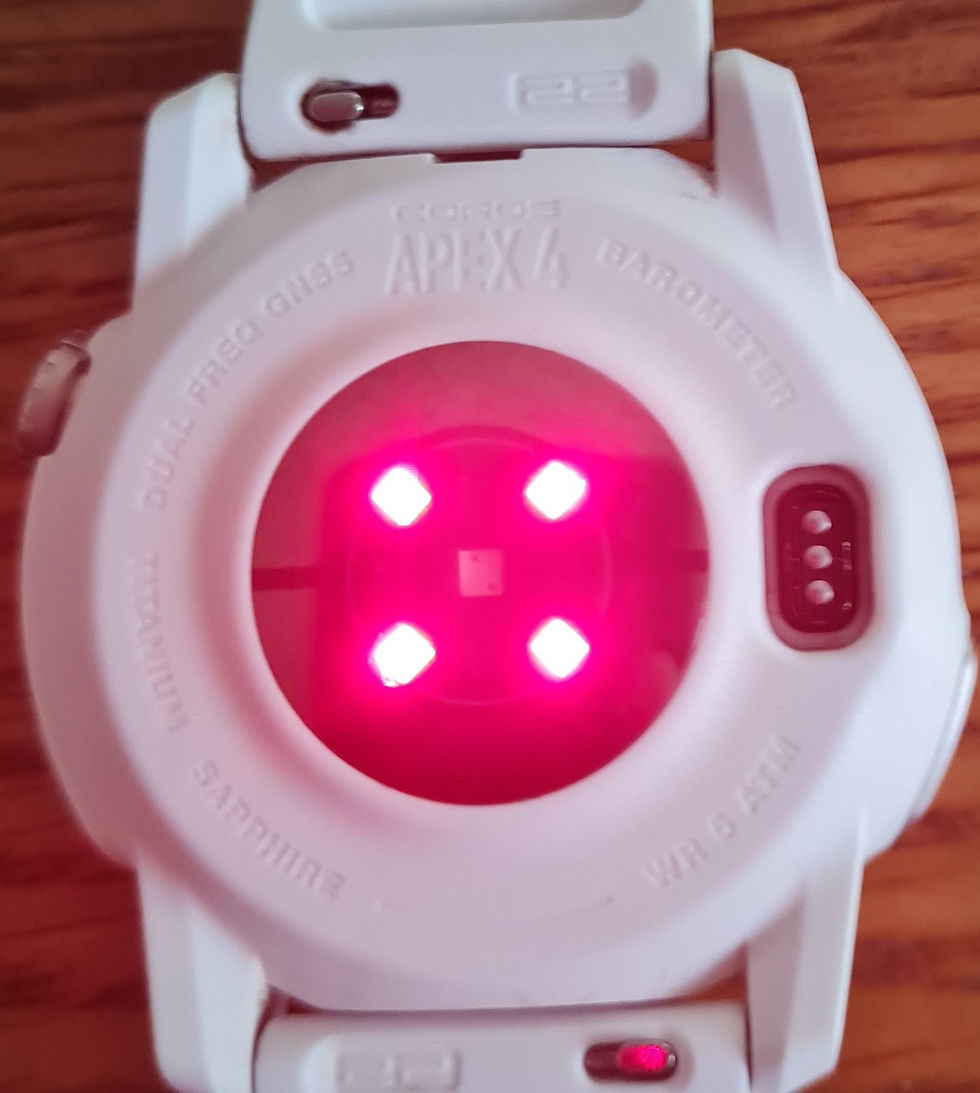
If your wrist-based sensor is providing noisy data, any metric your watch calculates based on that heart rate will be flawed. - better to have no data over inaccurate data.
Your own brain is the ultimate regulator of exercise.
With a constant stream of metrics being thrown at you, it’s easy to forget that the most sophisticated computer is your own central nervous system. This is where Rate of Perceived Exertion (RPE),how hard you feel you’re working, becomes a more powerful performance tool than any digital feedback. Training and racing by feel teaches you to calibrate your internal "governor" - a skill far more valuable than any number on a device.
Think of RPE as an "integrated signal." While a watch looks at metrics in a vacuum, your brain is processing everything at once: the heat, the technicality of the climb, and how much sleep you actually got last night.
Developed in the 1960s by Swedish psychologist Dr. Gunnar Borg, the original RPE scale ran from 6 to 20. It’s a bit of a weird range, but there was a fascinating reason for it: Borg found a high correlation between an athlete’s subjective score and their actual heart rate when multiplied by 10. For example, if a runner felt like they were at a 15, there was a good chance their heart rate was around 150 BPM. RPE can be considered a highly sophisticated, real-time feedback loop.
A Low-Tech Calibration Method: Combining RPE with the "Talk Test"
RPE is great but it can be subjective. To make it more objective, it can be paired with the "Talk Test." While this isn't quite a replacement for a laboratory stress test, it is a highly effective tool that aligns pretty well with how your body is handling the work.
We can’t talk about the Talk Test without quickly mentioning the ventilatory thresholds. There are two ventilatory thresholds, the Talk Test centres around the second one (VT2) but your first ventilatory threshold (VT1) comes first. VT1 represents a shift in metabolism where your body can no longer exclusively rely on aerobic metabolism (well its almost exclusively aerobic below VT1 but everything in biology is on spectrum so you are always using a mix of systems). This shift leads to a slight rise in blood acidity, triggering a complex buffering process that ultimately results in an increased level of CO2, which needs to be exhaled by the lungs. Push harder and you will hit VT2. VT2 is your 'red line.' At this point, the acidity in your blood is rising too fast for your buffering systems to keep up. As a result, your respiratory system has to work very hard to blow off increasing levels of CO2. A quick note this rise in acidity is not because of lactate itself, that is a persistent myth, see below for a quick explanation.
Enough already, stop blaming lactate! Lactate doesn’t cause the burn or fatigue; it’s actually a valuable fuel and acidity buffer. That burning sensation results from hydrogen ions accumulating in your muscles and blood as your body breaks down ATP (muscle fuel) for energy. The creation of lactate soaks up these hydrogen ions and takes them away to prevent your muscles from reaching failure too quickly. The myth about lactate stems from early 20th-century experiments on frogs, where researchers found high lactate in fatigued frog’s legs and mistook correlation for causation. In reality, lactate powers your heart, brain, and muscles, helping you manage acidity so you can push harder for longer.
Back to the Talk Test; The talk test has three levels of intensity:
1. Below VT2 (can speak without difficulty). This is your easy zone - all day pace.
2. At VT2 (can speak but its laboured, only one sentence can be said before becoming out of breath)
3. Above VT2 (can only speak with extreme difficulty or not at all). This has also been shown to correlate reasonably well with the second lactate threshold (the one that’s referred to as ‘the lactate threshold’ where your body can no longer shuttle or use lactate as quickly as it accumulates).
While your smartwatch might try to guess these based on your heart rate, the real data is happening in your blood. Your breathing is a real-time reflection of this shifting chemistry. By using the Talk Test, you can anchor your effort to what’s actually happening in your body.
When you pair the Talk Test with the RPE scale (see the suggested table below), you have a fool-proof way to assess your intensity. It ensures your easy runs stay easy and you don't overcook your system on harder efforts just because you were chasing a specific number on your wrist. Sometimes, the best sensor you have is simply listening to your own breath.
RPE | Intensity | Breathing | Talk Test |
10 | Maximum | Out of breath cannot sustain for long | Single words or absent. Above VT2 |
8-9 | Hard | Deep & Laboured | Short sentences make you short of breath. Single words. At / climbing above VT2 |
6-7 | Moderate | Getting heavier | Can speak in short sentences but laboured. At VT2 |
4-5 | Comfortable | Slightly laboured | Still relatively easy. Below VT2 |
2-3 | Light | Easy | Easy. Below VT2 |
1 | Very Light | Barely different | Easy. Below VT2 |
An important note on the Talk Test , ‘saying’ a sentence in your head is not the same as saying it out loud so you do have to actually speak to do this right, if you run alone you will look a bit mad.
Putting the Watch in its Place
There is some debate about whether athletes should "de-tech," but there is a middle ground: using wearables for their data-tracking strengths while staying aware of their limitations. Rather than letting a watch command your workout, try using it as a tool for review once the session is over.
An effective strategy is letting RPE dictate your pace during the run, then checking the data afterward to see what happened. This is especially helpful for longer efforts where cardiovascular drift occurs. This is a natural phenomenon where your heart rate slowly rises over a long session even if your speed stays the same. If you let the watch dictate your pace here, you might slow down unnecessarily to stay in a specific "zone," even though your actual effort hasn't changed.
On the flip side, significant fatigue can cause your heart rate to be suppressed or blunted, meaning it stays lower than usual even when you’re working hard. If you rely only on your device, you might ignore your body's signals of exhaustion and push too hard just to hit a target number. This is a fast track to injury or overtraining syndrome.
By reviewing the data later, these patterns become clear. Remember: heart rate is a measure of total stress on the body, not just the exercise itself. Factors like heat, caffeine, poor sleep, illnesses and stress all play a part.
While heart rate might not be the best tool for pacing a race, it is a useful metric for tracking long-term health and recovery. For instance, monitoring your Resting Heart Rate (RHR) immediately upon waking can be very revealing. A downward trend in RHR over time is a great sign that your heart has become more efficient, pumping more blood with every beat. To get an accurate baseline, average your RHR over three or four consecutive days. Don’t forget that how you feel still trumps the data though if you feel consistently tired and your heart rate is lower than expected, or suddenly spiking, your body is likely asking you to back off.
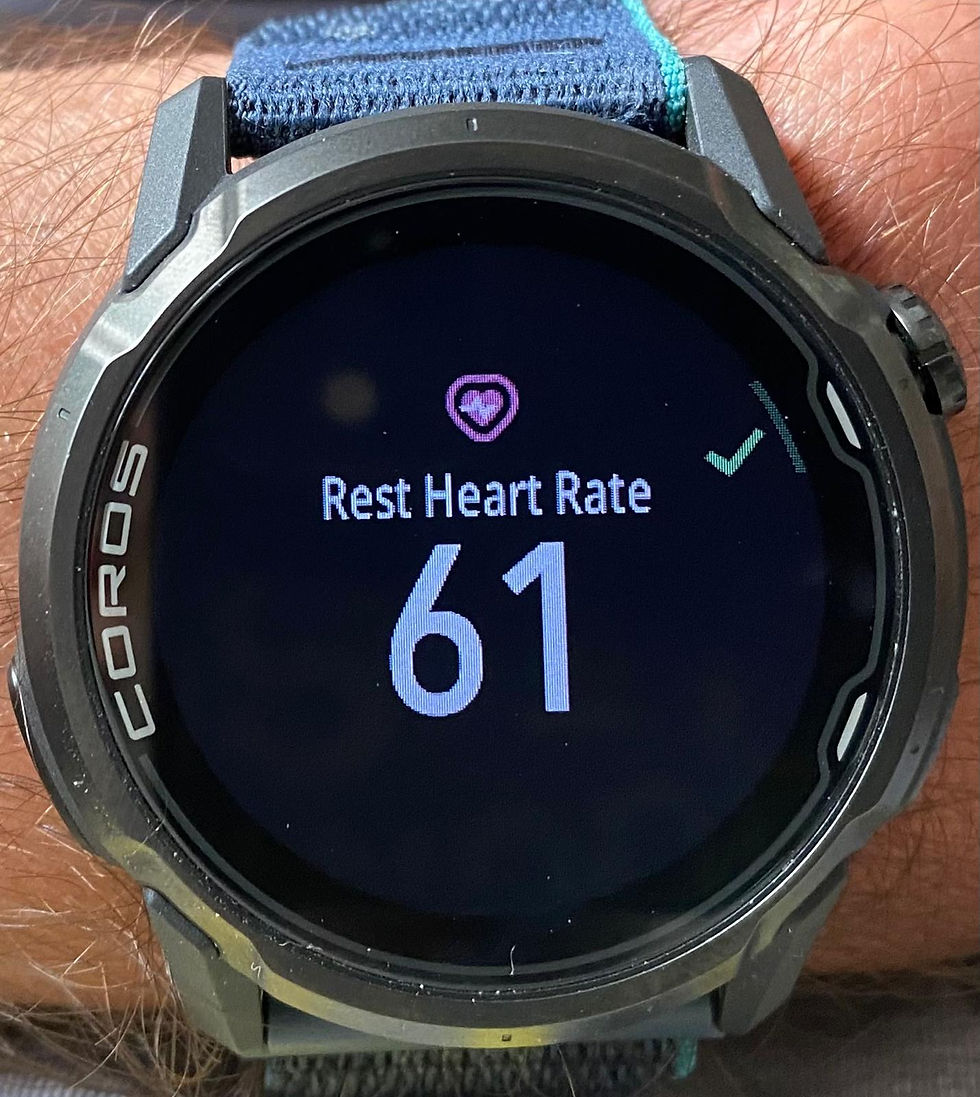
The real value is found in the long-term data. Over months of training, seeing your heart rate drop or your pace increase for the same RPE is a clear sign of progress. If you are still motivated to dive deep into every metric provided, great, but remember that your brain is the real boss. Your internal governor is far more tuned in to your body’s daily needs than any algorithm.
If you are interested and want to read more:
On Paavo Nurmi Life story - Paavo Nurmi THE FLYING FINN
On sleep tracking Jahrami, H., et al. 2023. The tale of orthosomnia
On the accuracy of heart rate monitors: Pasadyn, S.R., et al. 2019. Accuracy of commercially available heart rate monitors in athletes
On the unfair treatment of lactate Robergs, R.A.,et al. 2004. Biochemistry of exercise-induced metabolic acidosis.
And the talk test Recalde, Pedro T., et al 2002. The talk test.


